
Coming back from vacation rarely hurts because you left the beach or the mountains behind.
It hurts because within forty-eight hours, the old noise floods back in: sixty-tab browser sessions, Slack notifications pinging through dinner, rushed breakfasts, and that quiet, creeping exhaustion of living where you work.
Most of us assume we miss the destination. We don’t. We miss how our brains functioned while we were there.
On vacation, you operate under fundamentally different operating conditions:
-
Fewer micro-decisions: You pick where to eat and what path to walk. You aren’t weighing thirty competing priorities before 9:00 AM.
-
Hard boundaries: “Out of office” isn’t an aspiration; it’s a real wall between you and obligations.
-
Natural daylight and movement: You move your body between locations instead of pacing eight steps from the bed to the desk.
-
Minimal context switching: You do one thing at a time.
You cannot turn a random Tuesday into a week in southern Italy. But you don’t need a plane ticket to recreate the conditions that made you feel human again.

The Mistake of Unpacking Everything
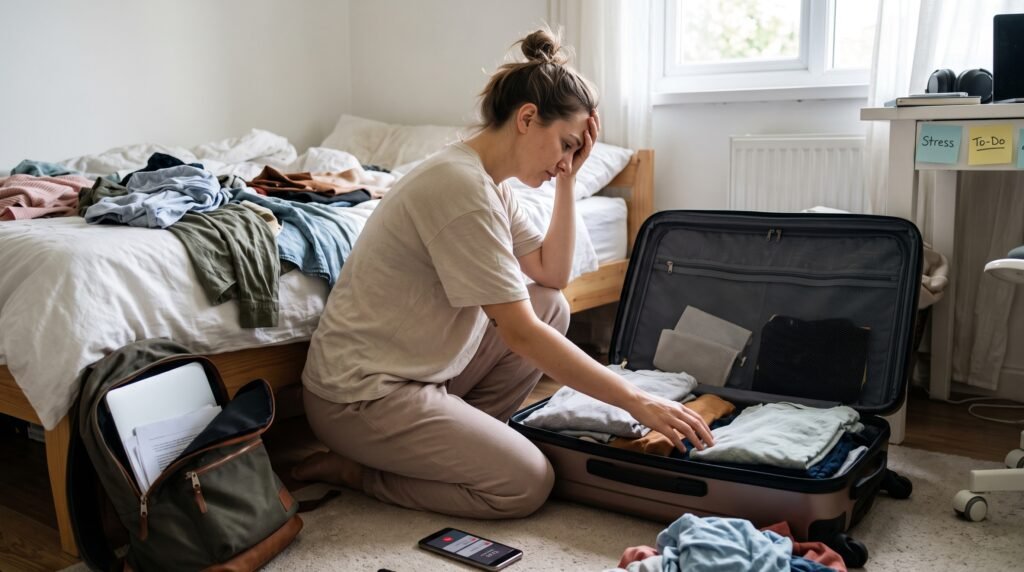
The moment you get home, the suitcase gets unpacked. Laundry runs, toiletries return to the cabinet, and without thinking about it, you unpack every stressful baseline habit you left behind.
The late-night laptop sessions resume. The line between “living room” and “office” vanishes. You immediately surrender the mental margin you spent seven days building up.
Instead of accepting that slide back into default mode, pick one condition from your time off and deliberately keep it in your rotation:
1. Build a physical buffer between work and evening
When your office is inside your home, your workday doesn’t end; it just slowly bleeds out. Reintroduce physical transition. Take a 20-minute walk outside the moment you close your laptop—no podcasts, no work calls. Treat that walk as your commute home from work.
2. Guard one “dark” evening a week
Pick one night—Tuesday, Thursday, whatever fits—where all screens shut down at 6:00 PM. No casual inbox checks from the couch. No “quick replies” while watching a show. A single protected evening gives your nervous system the predictable downtime it only ever gets while you’re away.
3. Break the domestic sensory loop
Working from the same corner for forty hours a week breeds sensory stagnation. Your brain associates your home office with every chore you haven’t finished, every email you haven’t answered, and every domestic interruption waiting outside the door.
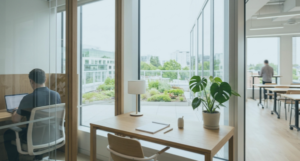
Shifting your physical environment just once or twice a week, to a library, a quiet café, or a dedicated workspace, breaks that loop. It reintroduces two things that make travel restorative: physical separation and novelty.