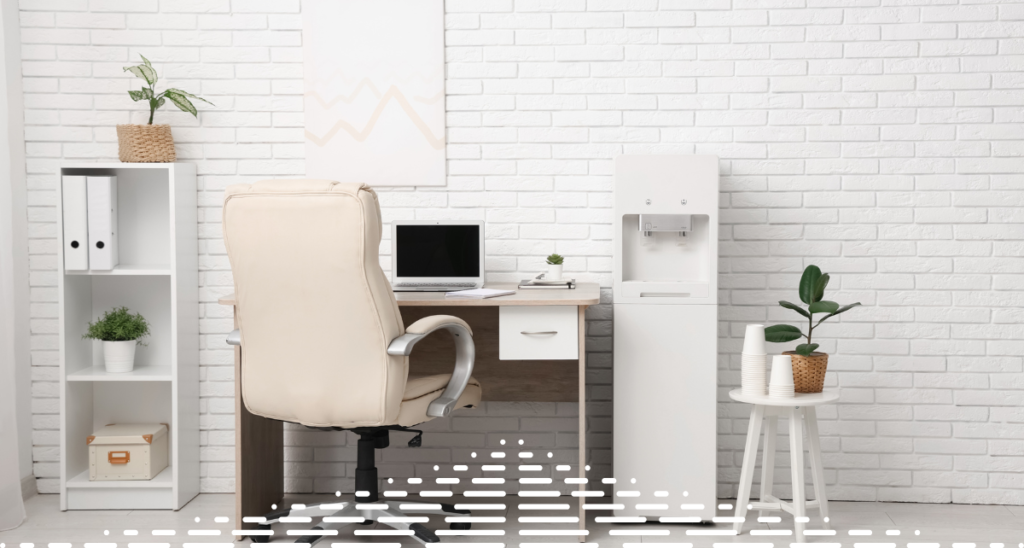
Most of us sit in the exact same chair, at the exact same desk, facing the exact same wall, and expect our brains to execute four completely different modes of thinking.
At 9:00 AM, that chair is supposed to be a distraction-free zone for analytical deep work. At 11:00 AM, it is a soundstage for expressive client calls. By 1:30 PM, it needs to inspire expansive, creative brainstorming. And by 4:00 PM, it is an administrative assembly line for clearing out thirty unread emails.
When a task grinds to a halt, the knee-jerk reaction is to blame our focus.
In reality, the friction often comes from forcing the wrong mode of thinking into the wrong physical space. The work isn’t necessarily hard; the setting is simply fighting the task.
Not All Thinking Uses the Same Cognitive Engine
Before sitting down to work, the most practical question you can ask isn’t “What is on the to-do list?” but rather “What kind of mental energy does this require?”
Different work types thrive under fundamentally different environmental conditions:
-
Deep, analytical problem-solving: Requires minimal peripheral motion and absolute acoustic control. Even low-level domestic movement or unpredictable chatter pulls processing power away from complex tasks.
-
Administrative cleanup and email triage: Thrives in open, energetic spaces. Moderate ambient sound and daylight can actually keep energy levels buoyant while plowing through repetitive, low-cognitive tasks.
-
Creative ideation and strategic planning: Benefits from broad visual fields, higher ceilings, or open outdoor air. Expanding your visual horizon naturally cues the brain to think more expansively.
-
High-stakes calls and interviews: Require psychological safety and complete acoustic privacy, where you aren’t unconsciously lowering your voice or worrying about background noise.
Trying to tackle complex strategy while surrounded by kitchen clutter makes as little sense as trying to hammer out administrative emails in a library basement.

Activity-Based Working Without the Bureaucracy
In large corporate offices, this principle is called activity-based working. But you don’t need a massive commercial campus or a complicated schedule to put it into practice.
The goal is simply to let the nature of the work dictate where your body sits:
-
Reserve quiet zones for single-focus tasks: When you have sixty minutes to build a spreadsheet or write a technical proposal, eliminate visual static. Move to a corner, put on noise-dampening headphones, and treat that physical position as single-task only.
-
Use social or open spaces for momentum: Take your administrative to-do list to an open table, a café corner, or a community lounge. The ambient hum helps push repetitive tasks forward without feeling stagnant.
-
Step outside when thoughts lock up: When strategic planning stalls, staying in your chair only tightens the mental knot. Step out onto a terrace, go for a quick lap around the block, or move to a window. Shifting your field of vision interrupts cognitive fatigue.
Productivity rarely comes down to forcing yourself to endure uncomfortable hours in a single spot. It comes from paying attention to resistance.
When a task feels heavier than it should, stop trying to muscle through it from the same chair. Take sixty seconds to name the type of thinking you actually need, move your body to a space that supports that energy, and let the physical environment carry some of the weight for you.